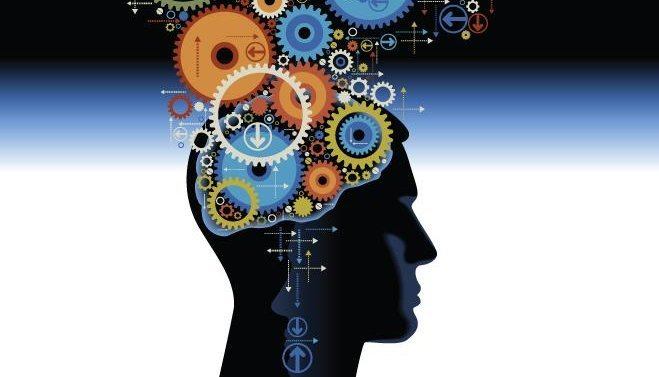
Strategic clarity isn’t just about what you know—it’s about how you think. In high-stakes environments, leaders are constantly asked to make decisions with incomplete information, competing priorities, and shifting constraints. What separates the great from the good isn’t just experience. It’s the mental models they use to navigate complexity.
Mental models are frameworks for understanding the world. They help us simplify, prioritize, and act with confidence. For business leaders, they’re not academic—they’re essential. In this article, we’ll explore key mental models that drive better strategic decisions, and how to apply them in real-world scenarios.
What Are Mental Models?
A mental model is a way of seeing. It’s a lens through which we interpret data, assess risk, and make choices. Think of it as a cognitive shortcut—one that helps you avoid analysis paralysis and focus on what matters most.
Great leaders don’t rely on a single model. They build a toolkit. They know when to zoom out, when to zoom in, and how to shift perspectives based on the challenge at hand.
Why Mental Models Matter for Strategy
In strategic planning, mental models help leaders:
- Clarify assumptions: What are we taking for granted?
- Spot blind spots: What aren’t we seeing?
- Frame decisions: Are we solving the right problem?
- Communicate clearly: Can others follow our logic?
Without mental models, strategy becomes reactive. With them, it becomes intentional.
Five Mental Models Every Strategic Leader Should Know
1. First Principles Thinking
Popularized by Elon Musk, this model asks: “What do we know to be true?” Instead of reasoning by analogy (copying what others do), first principles thinking breaks problems down to their fundamental truths and builds up from there.
Use it when: You’re facing entrenched industry norms or trying to innovate from scratch.
Example: Instead of asking “How do we improve our delivery speed like our competitors?” ask “What are the physical and logistical constraints of delivery—and how can we redesign them?”
2. Second-Order Thinking
This model forces you to look beyond immediate consequences. It asks: “And then what?” Strategic decisions often have ripple effects—second-order thinking helps you anticipate them.
Use it when: You’re making decisions that affect customers, teams, or long-term positioning.
Example: Cutting customer support costs may improve margins short-term, but what’s the second-order effect on retention, brand trust, and lifetime value?
3. Inversion
Instead of asking “How do we succeed?” inversion asks “How do we fail?” It’s a powerful way to uncover risks, blind spots, and hidden assumptions.
Use it when: You’re planning a launch, campaign, or strategic pivot.
Example: If your goal is to improve client onboarding, ask “What would make onboarding fail?” Then build safeguards against those failure points.
4. The Eisenhower Matrix
This model helps leaders prioritize by urgency and importance. It divides tasks into four quadrants: urgent/important, not urgent/important, urgent/not important, and not urgent/not important.
Use it when: You’re overwhelmed by competing priorities or leading a team through change.
Example: Strategic planning is rarely urgent—but always important. Leaders who neglect it get stuck firefighting instead of building.
5. Circle of Competence
Coined by Warren Buffett, this model reminds leaders to operate within areas they understand deeply—and to be honest about what they don’t.
Use it when: You’re evaluating new markets, partnerships, or investments.
Example: If you’re a beverage distributor considering a tech acquisition, ask: “Is this inside our circle of competence—or do we need outside expertise?”
How to Build Mental Model Mastery
Here’s how to make mental models part of your strategic toolkit:
- Study them: Read widely—across disciplines. Physics, psychology, economics, and philosophy all offer powerful models.
- Practice them: Apply models to real decisions. Use them in meetings, planning sessions, and client work.
- Teach them: Share models with your team. Strategic literacy builds alignment and trust.
- Refine them: Not every model fits every situation. Learn when to use, combine, or discard them.
Strategic Thinking Is a Skill—Not a Trait
Too often, strategic thinking is treated as an innate gift. But it’s a skill. One that can be learned, practiced, and refined. Mental models are the scaffolding that support that skill. They help leaders move from reactive to proactive, from tactical to visionary.
In my work with executives and growth-stage teams, I’ve seen how mental models transform decision-making. They create clarity, confidence, and momentum. And they’re especially powerful when paired with metrics that matter—like those explored in the Behind the Metrics series.
Final Thought: Think Better to Lead Better
Leadership isn’t just about making decisions—it’s about making the right decisions, at the right time, for the right reasons. Mental models help you do that. They sharpen your thinking, align your team, and build a foundation for sustainable growth.
So the next time you’re facing a strategic crossroads, pause. Ask: What model fits this moment? And lead with clarity, not just instinct.
Because great strategy starts with great thinking.