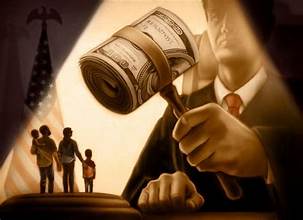
Most people think of “justice” as something dramatic — a courtroom showdown, a jury, a verdict. But for most Americans, justice doesn’t look anything like that. It happens quietly, in cramped civil courtrooms where the stakes are enormous and the odds are lopsided.
This is where people fight to keep their homes, protect their wages, secure disability benefits, or sort out custody of their children. These cases don’t get TV shows. They don’t get podcasts. They barely get news coverage. But they shape the trajectory of people’s lives in ways that are every bit as consequential as anything that happens in a criminal trial.
And here’s the uncomfortable truth: In civil court, low-income people are almost always on their own.
The Civil Justice Gap Is Real — and It’s Massive
The Legal Services Corporation estimates that 86% of civil legal problems faced by low-income Americans receive inadequate or no legal help at all. That number alone should stop us in our tracks.
- In eviction cases, 92% of landlords have lawyers, but only 8% of tenants do.
- In consumer debt cases, over 70% end in default judgments.
- In family court, 90% of parents in custody disputes have no legal representation.
- Overall, 80% of civil legal needs among low-income households go unmet.
A System Built for Lawyers — Navigated by People Without Them
Civil courts were never designed for everyday people. The forms are dense. The deadlines are rigid. The rules assume legal training. Yet the system expects people — often stressed, scared, and overwhelmed — to figure it out alone.
Picture a single parent facing eviction. They’re handed a stack of documents filled with legal jargon. They’re told to appear in court on a weekday morning, missing work they can’t afford to miss. The landlord’s attorney is there, polished and prepared. They’re not.
This isn’t a fair fight. It’s barely a process.
The Fallout Is Economic, Emotional, and Generational
Civil justice failures ripple outward:
- Eviction often leads to homelessness, job loss, and school instability.
- Wage garnishment traps families in cycles of poverty.
- Benefits denials push people deeper into economic hardship.
- Custody losses fracture families permanently.
Studies show that every $1 invested in eviction defense saves $3–$6 in public costs — shelter beds, emergency services, foster care placements.
Legal Aid Is Doing Heroic Work — But It’s Overwhelmed
Legal aid organizations are filled with dedicated professionals who do extraordinary work with limited resources. But demand dwarfs capacity. Most legal aid offices turn away half to two-thirds of eligible clients simply because they don’t have enough staff.
Civil Justice Is Where Inequality Actually Lives
We talk a lot about inequality in America — in housing, healthcare, education, wages. But civil justice is the thread that runs through all of it. It’s the mechanism that determines whether people can actually enforce their rights.
And right now, the system works like this:
- Wealthy people hire lawyers.
- Middle-class people struggle to afford them.
- Low-income people go without.
Same courthouse. Same judge. Different outcomes.
What a Fair System Would Look Like
- A right to counsel in high-stakes civil cases.
- Simplified, human-centered processes that people can actually understand.
- Sustainable funding for civil legal aid.
- Early intervention to prevent crises before they spiral.
- Transparency around representation rates and outcomes.
A Simple Call to Action: Equal Justice Requires Equal Access
If we believe in equal justice under the law, then we need a system where:
- Your income doesn’t determine your outcome.
- Your rights don’t depend on your resources.
- Your future isn’t decided by whether you can afford a lawyer.
Civil justice isn’t optional. It’s the quiet engine of fairness in American life — and it’s time we finally treated it that way.