How Shelf Sets, E‑Commerce, and Algorithmic Discovery Are Rewriting Beverage Alcohol
The beverage alcohol industry is entering a new era—one where retail is no longer a static endpoint but a dynamic, algorithm-driven ecosystem. Shelf sets are being reorganized, e‑commerce is becoming a discovery engine, and algorithms are quietly becoming the new gatekeepers. The old model of distribution-first growth is giving way to a demand-first retail environment where cultural pull, search behavior, and digital visibility determine who wins.
This shift is not subtle. It is structural. And it is reshaping how brands earn placement, how consumers discover products, and how retailers design their stores. The new retail reality is emerging faster than most industry leaders realize—and it will define the competitive landscape of 2026 and 2027.
Retail Is No Longer a Shelf—It’s a System
For decades, retail was predictable. Categories were organized by spirit type. Discovery happened in-store. The shelf was the primary battleground. But today’s consumer doesn’t start at the shelf—they start on their phone. They search, scroll, compare, and filter long before they walk into a store or place an online order.
This shift has created a new retail system with three interconnected layers:
- Physical shelf sets — still important, but no longer the first point of discovery
- E‑commerce storefronts — where search, filters, and recommendations shape choice
- Algorithmic discovery — the invisible layer that determines what consumers see first
Brands that understand this system will thrive. Brands that don’t will disappear from consumer consideration long before they reach the shelf.
Shelf Sets Are Being Reorganized Around Consumer Needs
The traditional category-based shelf—vodka, gin, whiskey, tequila—is losing relevance. Retailers are reorganizing around consumer need states and modern drinking occasions. This shift is driven by the fragmented consumer you’ve written about: people who shop by mood, moment, and identity rather than category.
Emerging shelf themes include:
- Spritz & Session — low-ABV, wine-based cocktails, aperitifs
- Better‑For‑You — low sugar, low calorie, clean-label spirits and RTDs
- Global Flavors — Asian spirits, agave, botanical blends
- At‑Home Cocktails — mixers, premium RTDs, vermouth, amaros
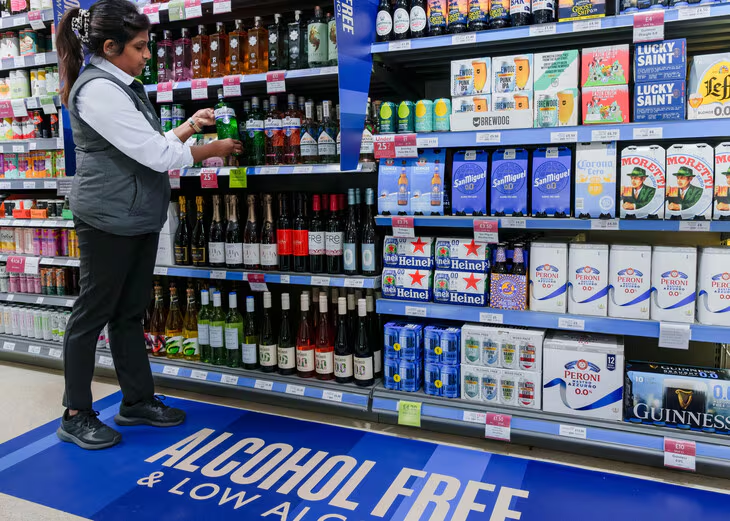
- NA & Low‑ABV — dedicated sections across beer, wine, and spirits
This is a fundamental shift: retailers are designing shelves for how people drink, not for how the industry historically categorized products.
E‑Commerce Is Becoming the New Back Bar
In the old model, the back bar was the discovery engine. Today, e‑commerce platforms—Instacart, Drizly, DoorDash, and retailer apps—play that role. They shape what consumers see, what gets recommended, and what gets bundled.
E‑commerce influences:
- Search visibility — which brands appear first
- Recommendation engines — “you may also like” and “frequently bought together”
- Basket building — how products are paired with mixers, snacks, or other spirits
- Impulse discovery — digital endcaps and featured placements
For many consumers, e‑commerce is the first point of contact with a brand. If a product doesn’t show up in search or recommendations, it effectively doesn’t exist.
Search Terms Are the New “Back Bar”
Consumers no longer browse categories—they search for solutions. The most common search terms are not “vodka” or “whiskey.” They are:
- “Tequila for margaritas”
- “Low sugar cocktails”
- “Spritz”
- “Botanical gin”
- “NA beer”
- “Whiskey for old fashioned”
This is a profound shift. Brands must now optimize for search behavior, not just shelf placement. If a brand doesn’t align with the way consumers search, it will lose visibility before the consumer ever reaches the store.
Algorithmic Discovery Is the New Gatekeeper
Algorithms now determine:
- Which products appear first in search
- Which brands are recommended
- Which items get bundled
- Which products appear in “top picks” or “popular near you”
This is the new gatekeeping layer—one that is invisible, dynamic, and increasingly powerful. It rewards brands with:
- High velocity
- Strong ratings
- Search relevance
- Cultural pull
- Repeat purchase
In this environment, brand heat becomes a measurable asset. Cultural relevance directly influences algorithmic visibility.
Retail Consolidation Is Changing Access
Large chains are centralizing buying decisions. This means:
- Fewer buyers control more shelf space
- Velocity and margin matter more than ever
- Brands must prove demand before they earn placement
- Trade spend alone cannot secure distribution
This reinforces your core thesis: demand creates distribution. Retailers want brands that move without heavy support. They want products consumers ask for by name.
Value‑Premium Is Reshaping Assortment Strategy
Economic pressure and selective premiumization are pushing retailers to expand the $20–$40 tier. This tier delivers:
- Velocity — consumers buy it regularly
- Margin — retailers earn more per bottle
- Stability — recession-resistant performance
- Relevance — aligns with modern drinking behavior
Retailers are reducing ultra-premium facings and expanding value‑premium because it reflects how consumers actually shop.
NA and RTDs Are Forcing New Adjacencies
Retailers are struggling with where to place:
- NA spirits
- Functional NA beverages
- Wine-based RTDs
- Low‑ABV spritzes
- Coffee cocktails
These products don’t fit neatly into traditional categories. As a result, retailers are experimenting with:
- Occasion-based sets — brunch, unwind, spritz, session
- Hybrid adjacencies — NA spirits next to mixers and RTDs
- Flavor-forward merchandising — citrus, botanical, tropical
This is the beginning of a new merchandising logic—one that mirrors how consumers think, not how the industry thinks.
Retail Is Becoming a Cultural Mirror
Retailers are increasingly influenced by cultural signals:
- What’s trending on TikTok
- What bartenders are recommending
- What micro‑communities are drinking
- What flavors are emerging in food culture
- What consumers are searching for online
Retail is no longer a passive endpoint. It is an active reflection of cultural momentum.
What Brands Must Do to Win in the New Retail Reality
Success in 2026 and 2027 requires a new operating model—one built around demand, relevance, and digital visibility.
Brands must:
- Optimize for search — align with how consumers search, not how categories are defined
- Build cultural pull — earn relevance before chasing distribution
- Design for modern occasions — spritz, unwind, session, at-home cocktails
- Win e‑commerce — ratings, reviews, and algorithmic visibility
- Deliver velocity + margin — the retailer’s new equation
- Fit into new shelf logic — flavor, function, identity, and occasion
The brands that succeed will be the ones that understand retail as a system—not a shelf.
Conclusion — The Future of Retail Is Dynamic, Digital, and Demand‑Driven
The retail environment that defined beverage alcohol for decades is gone. In its place is a dynamic, algorithm-driven ecosystem where discovery happens online, shelf sets reflect consumer behavior, and cultural relevance determines visibility.
The future belongs to brands that earn their place through demand, identity, and digital presence—not those that rely on distribution muscle alone.